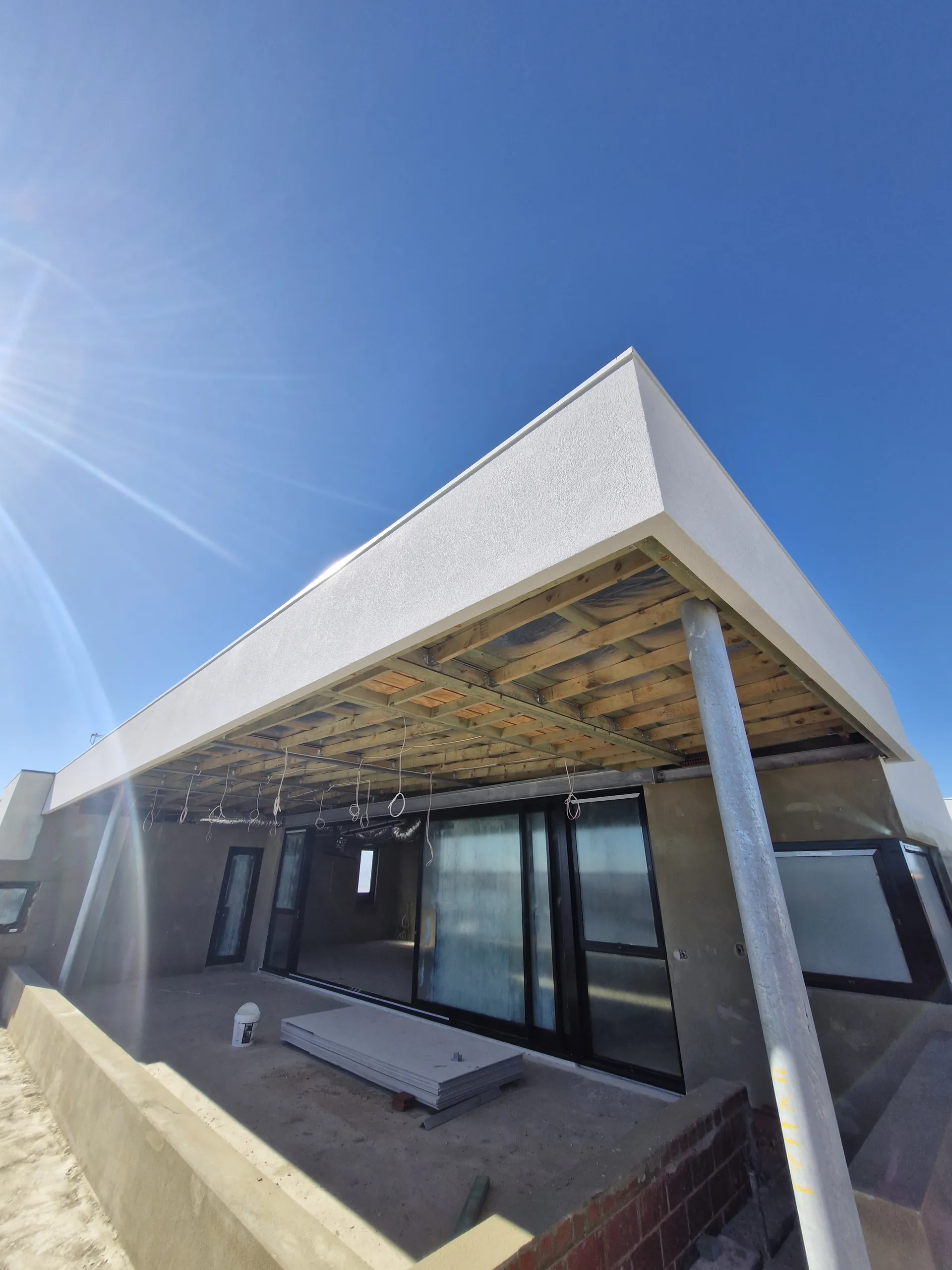
Rendered foam cladding can combine a lightweight external wall layer with a continuous rendered appearance. It is worth assessing as a complete facade system: the EPS panels, supporting construction, junctions and coatings all contribute to the result.
The useful question is how that system fits the proposed building. A list of general advantages cannot establish suitability for every house, apartment or commercial property. EcoClad WA can discuss foam cladding through material supply or a managed installation and finishing package.
Where rendered foam cladding can help
EPS panels provide a lightweight cladding layer and can contribute insulation to the wall assembly. A rendered finish also allows the visible exterior to be considered across walls, corners and architectural details.
Keep performance claims tied to the specified wall construction. Thermal outcomes depend on more than the foam panel, including the frame and other insulation. A generic claim about energy savings does not replace the project's energy assessment.

What requires careful specification
EPS is combustible, so building classification and applicable fire requirements matter. Suitability must be established for the exact system and jurisdiction before the appearance or panel price becomes the deciding factor.
Openings, flashings, cavity drainage, fixings and junctions also need to follow the relevant details. These are concealed parts of the completed facade, so they should be resolved in the specification rather than judged from the final rendered surface.
The finish and future care
Allow for cleaning and inspection as well as the initial finish. For example, the Exsulite November 2025 manual calls for regular cleaning of exterior coatings and checks of sealants around openings, joints and fittings. Damaged sealant needs attention to reduce the risk of water entering, while visible cracks need professional assessment. These are system-specific care requirements, not a maintenance schedule for every EPS facade.
This upkeep affects access and future costs. High walls and exposed parapets still need to be reached safely, and repairing a damaged texture may require recoating a larger wall area to keep the colour and texture consistent. Keep the product and colour records with the project documents.
No single repainting interval or warranty applies to every rendered foam facade. The selected products, their conditions and the installed project determine what can be stated. Confirm those details for the proposed work.
Rendering a house is a different scope
Rendering suitable existing masonry can replace the exposed-brick appearance with a continuous surface and a chosen texture and colour. That can be useful when the desired change is the visible finish rather than a new panel wall system.
The trade-off is that preparation, access and a complete coating system become part of the work. Render does not resolve the cause of existing cracking or moisture, and the finished coatings require their specified care. On a heritage property, changing original brickwork may also need approval. Check those matters before treating rendering as a cosmetic cover-up.
Installing EPS cladding adds panels and associated components, so it is a different construction scope. Ask for each option to be described clearly; a rendering price and a complete cladding price do not cover the same work.
