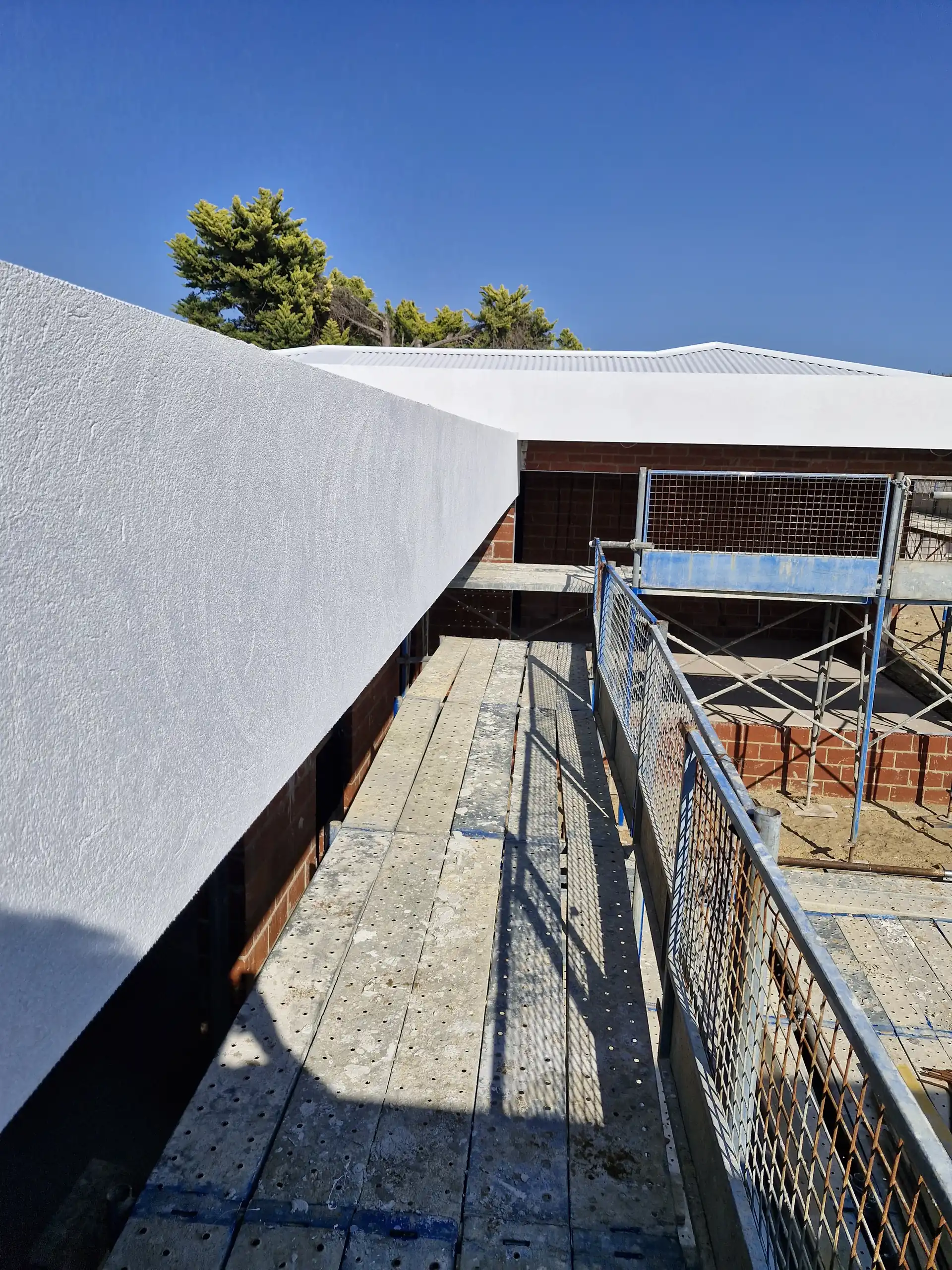
A selected texture coating gives a rendered facade its visible grain, colour direction and final surface character. EcoClad WA applies texture coating as part of its exterior cladding and rendering work, allowing the finish to be planned with the layers below it.
Texture coating is not simply another name for cement render. Dulux describes acrylic texture as an integrated flexible polymer coating system, while render provides the prepared base. The products must be suitable for the substrate and specified to work together.

Choose the Texture Profile Before the Final Colour
The same colour can read differently across a fine, sandy, rolled or coarser textured surface. Profile changes how light catches the wall, how much of the underlying surface is visually hidden and how the facade relates to brick, roofing, windows and feature elements.
Dulux Acratex publishes multiple texture products with different profiles and application methods. The chosen system should come from the project specification and an approved sample, not from a generic photograph viewed on a screen.
What the Texture-coating Stage Involves
Confirm the Prepared Surface
The render or approved substrate needs to be cured, sound, clean and prepared to the coating instructions. Repairs, contamination, inconsistent suction or poorly resolved junctions can affect the final appearance.
Set a Sample and Application Method
The selected texture product’s instructions determine the preparation and application method for that finish. A project sample helps settle the profile and colour before broad wall areas are completed.
Apply the Compatible Protective Finish
Some texture specifications use a separate protective topcoat for the intended exterior performance. The full product sequence, coverage rates and recoat conditions need to follow the current manufacturer data for the selected system.

Texture Coating for EPS and Rendered Walls
EcoClad's cladding and rendering package can carry a lightweight wall from EPS installation through render and texture coat. The same finish may also be discussed for other approved exterior substrates, but compatibility and preparation are assessed for the actual wall rather than assumed from appearance alone.
What Changes the Project Scope
Wall area, height, access, substrate condition, masking, architectural details, product selection and the number of colours all affect the work involved. Send current wall photos and the desired finish reference so the first conversation deals with the real surface and not a generic texture-coating price.
Cleaning, Inspection and Recoating
A textured surface needs care suited to its coating system. Dulux's general Acratex guidance recommends washing every 12 to 18 months, with more frequent cleaning in seaside locations, and checking sealants, drainage and nearby building elements at the same time. An Exsulite specification has its own maintenance instructions, which should be followed for that system.
Keep the product and colour details after the work is finished. They help identify a compatible touch-up or recoat system when the surface is damaged or the colour is changed. If dirt or mould keeps returning, investigate moisture and drainage conditions as well as cleaning the visible surface.

Related Facade Finishing Services
Texture Coating Service Area
EcoClad WA works from Osborne Park within a 300 km radius. Include the project address, wall type and approximate timing when enquiring so site access, travel and the coating scope can be considered together.
Osborne Park 6017
For an Osborne Park enquiry, identify the prepared wall surface and the texture profile you have in mind.
Fremantle 6160
For a Fremantle project, send wall photographs and the proposed colour and finish so the coating scope can be discussed.
For other Perth suburbs or projects within the wider service area, call 0421 888 172 to discuss your location and requirements.
